Nam June Paik: When Robots Were Friendlier
by Franck Mercurio, Publications Editor
10/23/2026
Remember Robot from Lost in Space? Rosie the Robot from The Jetsons? R2D and C3-PO from Star Wars? WALL-E and EVE from Disney? Remember when robots were friendlier creations of the human imagination?
New technology can be scary, especially now in this fraught moment of AI "creativity." Looking back to the art world of the 1960s, 70s and 80s, Korean-American artist Nam June Paik (1932–2006) — recognized as “the father of video art” — took the metaphorical bull by the horns and began experimenting with the new technology of the day to make new forms of art.
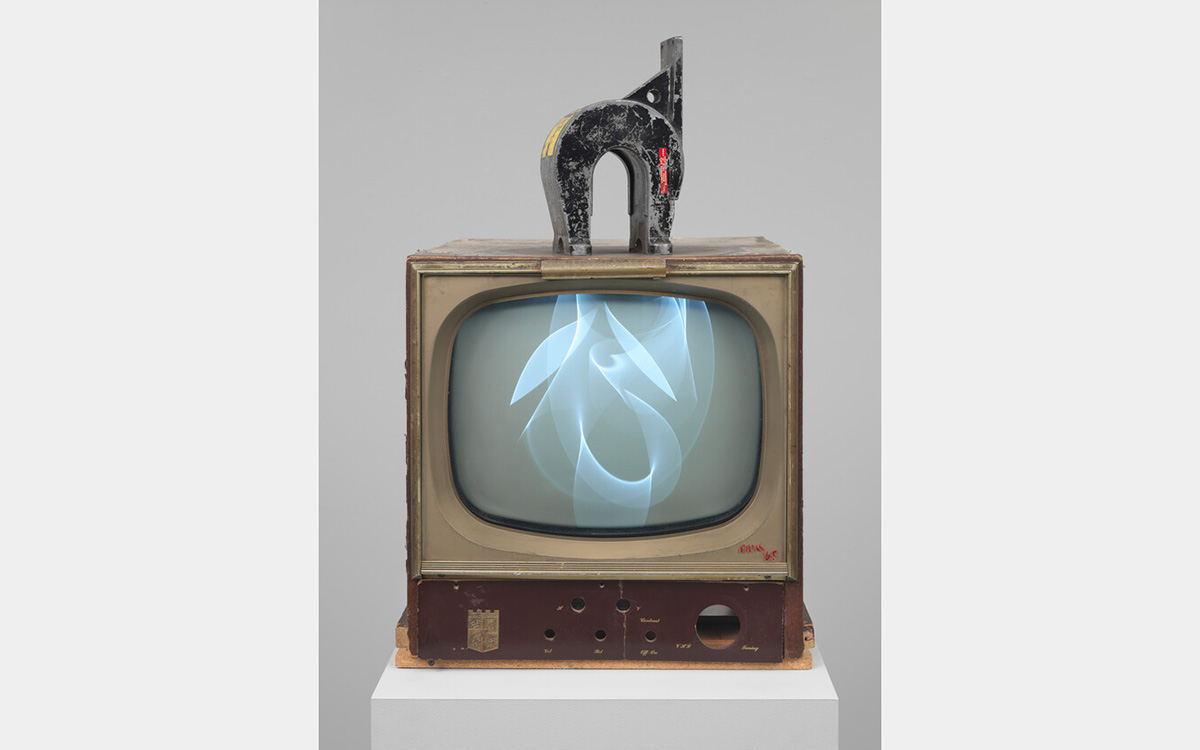
Nam June Pak, Magnet TV, 1965, television and magnet. Photo courtesy of Cincinnati Art Museum Mary R. Schiff Library & Archives (original in the collection of the Whitney Museum of American Art, New York).
Paik was a member of the avant-garde art collective Fluxus along with John Cage, Yoko Ono, and other artists who used chance operations and random processes to create works of performance art. During that time, Paik began his experiments with "TV art" using magnets and other devices to distort broadcast images. "Television is a dictatorial medium, like a one-way parachute,” stated Paik. “When a superior says something to an inferior, they can just listen and answer ’yes.’ The way of answering could be more interactive. I think talking back is what democracy means."
Paik’s big moment came in 1974 with his break-out piece TV Buddha, becoming the artist’s first work to enter into a museum collection—the Stedelijk Museum Amsterdam—in 1977.
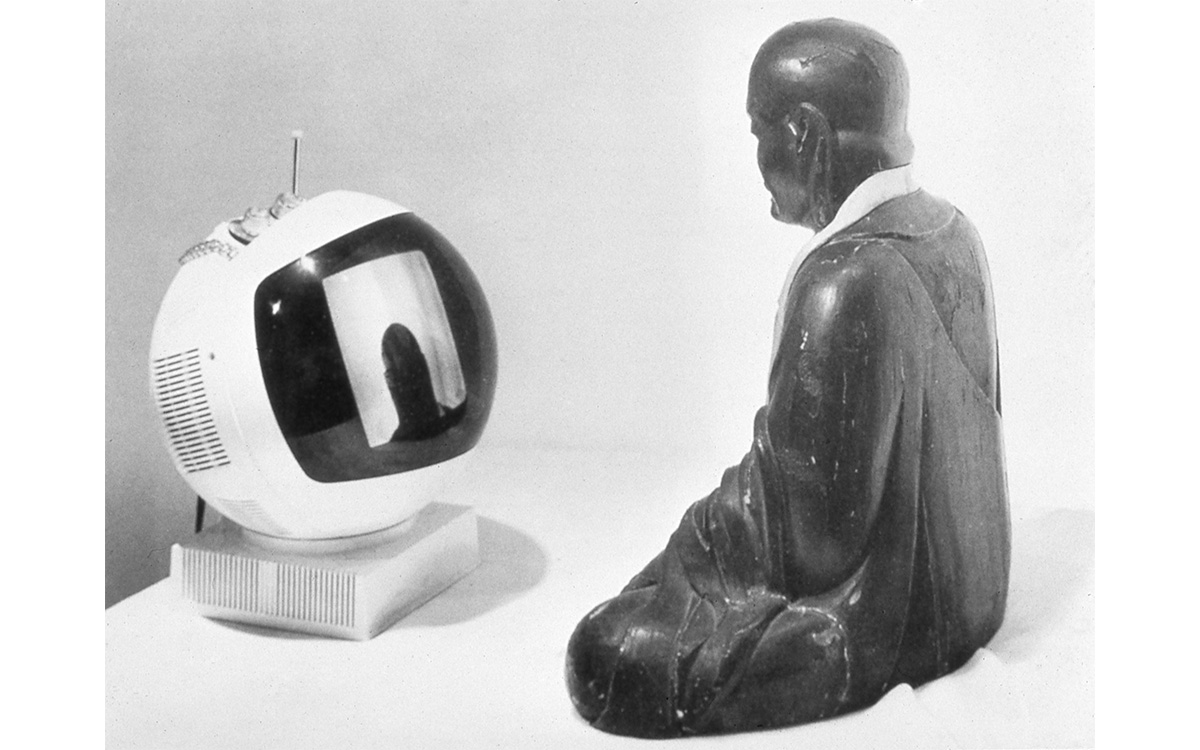
Nam June Paik, TV Buddha, 1974, image courtesy Cincinnati Art Museum Schiff Library & Archives (CAM15 - Box15 - Folder 02)
Paik later stacked TV sets into assemblages, creating visually stimulating and witty “robots.” The artist’s Powel Crosley, Jr., (below) pays homage to the founder of Cincinnati’s Crosley Corporation (1921–1956), a manufacturer of radios and later televisions. The sculpture is constructed of vintage radio and television sets with embedded video screens.
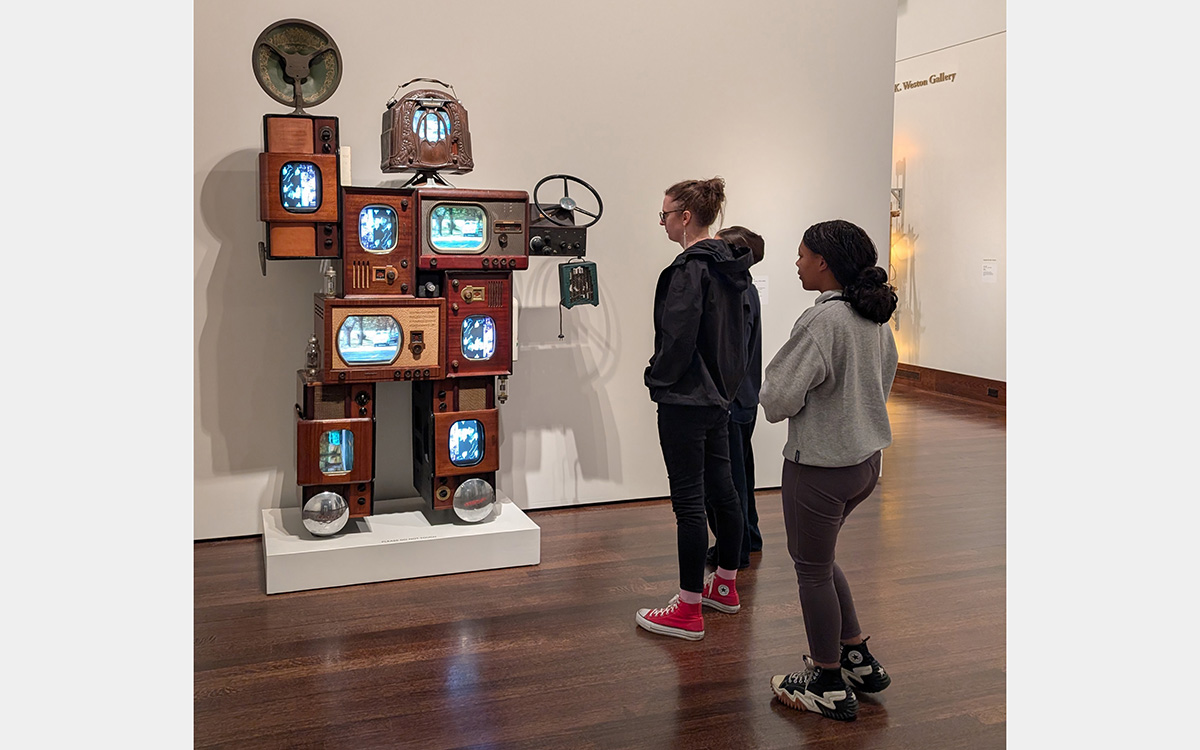
Nam June Paik (American, 1932–2006), Powel Crosley, Jr., 1992, wood, plastic, paint, glass, custom electronics, parts from a variety of Crosley products that date from the 1920s through the early 1950s, eight CRT televisions, two DVD players, video, John J. Emery Endowment and The Edwin and Virginia Irwin Memorial, 1992.140
Beginning in the 1980s, Paik collaborated with Cincinnati gallerist Carl Solway to build variations of his robots at the "Paik Factory" (first located inside the “Hudepohl Sign Building” on Third Street in Cincinnati, now demolished, then on Clay Street in OTR, and finally on Findlay Street in the West End). At his studio/workshop a cadre of assistants built Paik’s TV sculptures and created screen prints under the direction of Cincinnati printmaker Mark Patsfall.
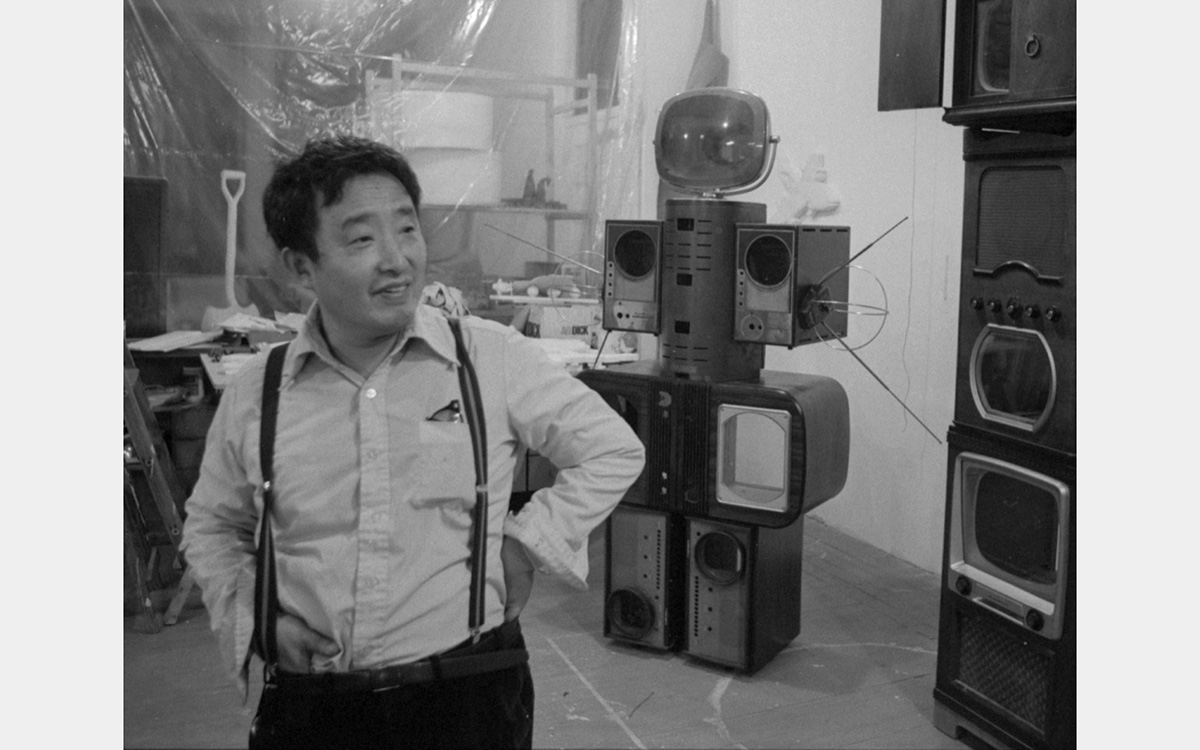
Nam June Pak in first iteration of the Paik Factory on 3rd Street in Cincinnati (1985). Image courtesy the Cincinnati Art Museum Mary R. Schiff Library & Archives
Paik’s connection to Cincinnati strengthened with the creation of Metrobot (1988). Philanthropist and art collector Albert Vontz Jr., commissioned Paik to create the 27-foot-tall public sculpture to celebrate the 50th anniversary of Cincinnati’s Contemporary Arts Center (CAC). Unveiled in 1988, Metrobot was first installed outside the CAC’s former location in the Mercantile arcade; the sculpture now grace’s the exterior of the CAC’s current home, the Lois and Richard Rosenthal Center for Contemporary Art (2003) designed by Zaha Hadid.

Cincinnati, OH 45202
Toll Free: 1 (877) 472-4226
Museum Hours
Museum Shop
Terrace Café
Library
Cincinnati Art Museum is supported by the tens of thousands of people who give generously to the annual ArtsWave Campaign, the region's primary source for arts funding.

Free general admission to the Cincinnati Art Museum is made possible by a gift from the Rosenthal Family Foundation. Exhibition pricing may vary. Parking at the Cincinnati Art Museum is free.
Generous support for our extended Thursday hours is provided by Art Bridges Foundation’s Access for All program.

General operating support provided by: