Early American Art: New Faces
by Bree Lehman, Volunteer Researcher in American Paintings, Sculpture and Drawings
11/4/2026
CAM’s recent reinstallation of its gallery of early American art provides the welcome opportunity for more regular rotating displays of the department’s exceptional portrait miniature collection. Newly on view are miniatures by French emigrant artists who fled political upheavals in France and its colonies to make the young United States their home. Both professionally trained and self-taught émigré artists enlivened the small, but rapidly changing American art world and helped to meet the populace’s insatiable demand for painted likenesses in the age before photography.
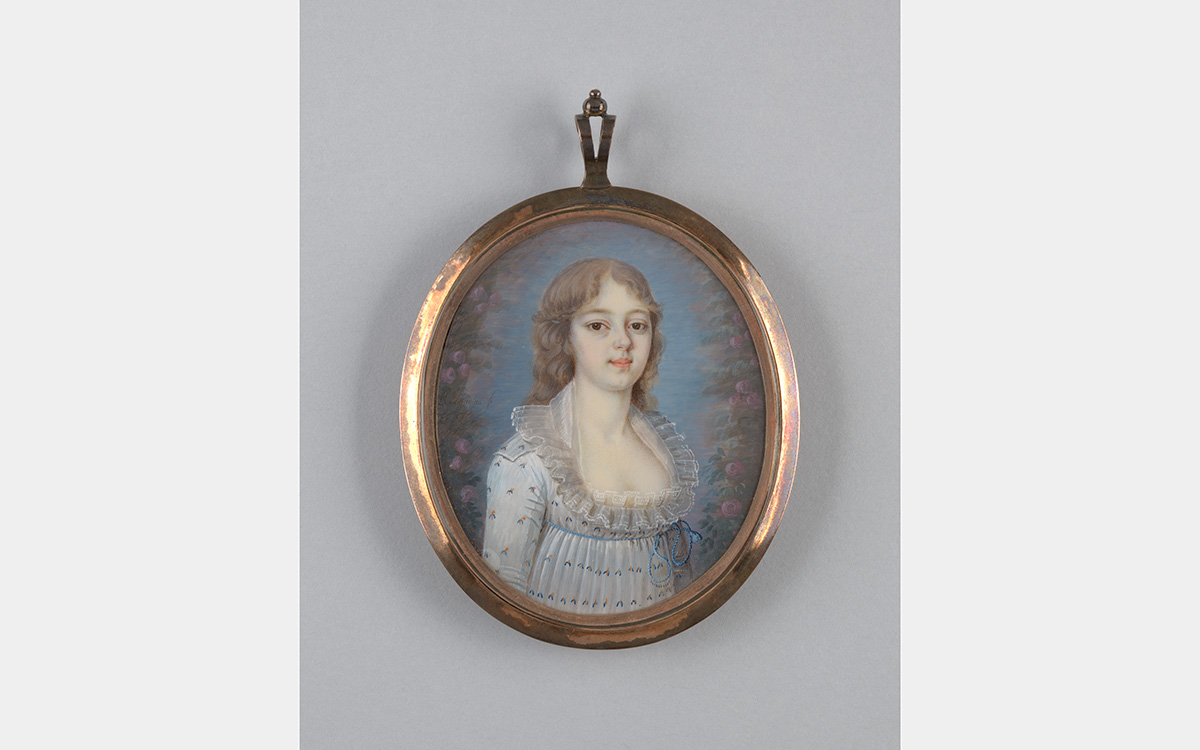
Philippe Abraham Peticolas (French/American, 1760–1843), Elizabeth Neill, 1797, watercolor on ivory, Gift of Priscilla Neill, 2022.48, front.
Among the works on display is a beautiful 2 9/16 x 2 1/4-inch portrait of Elizabeth Neill (1779–1812), the daughter of a well-to-do Scotch-Irish immigrant, by French artist Philippe Abraham Peticolas. Petciolas likely painted Neill’s portrait in 1797 in Frederick Town, Maryland—known simply as Frederick today. The portrait remained in family hands for more than two centuries before its donation to the museum in 2022.
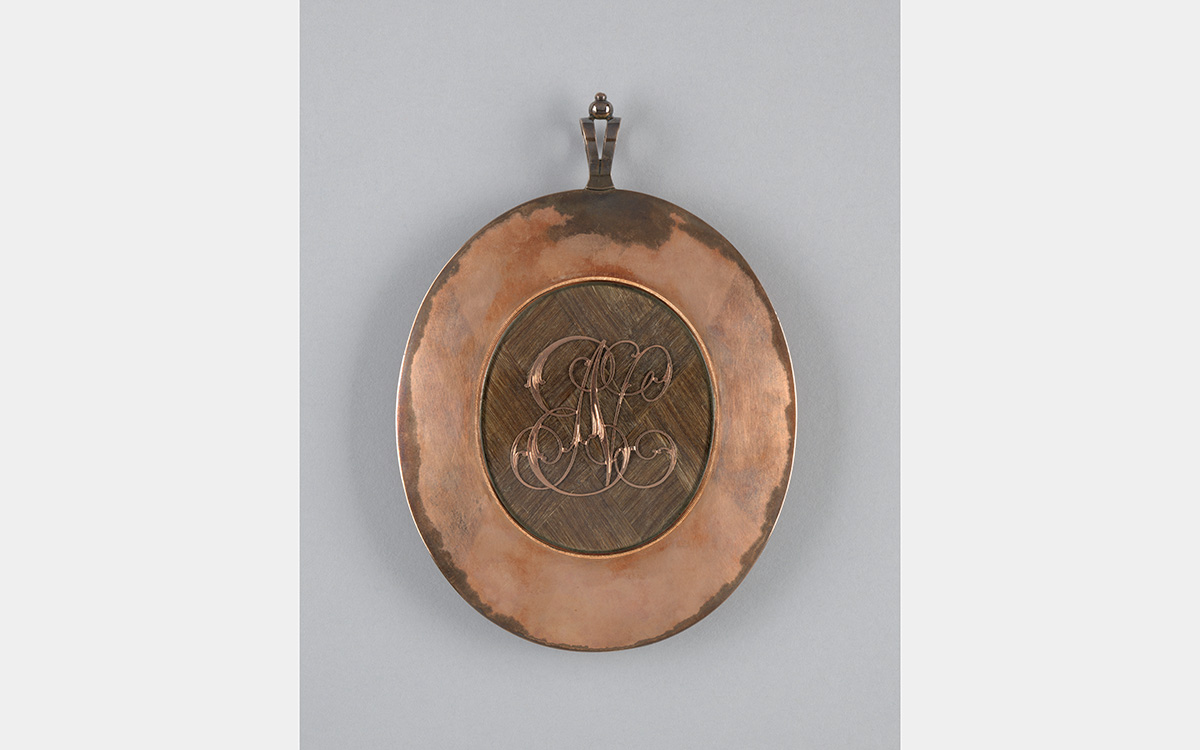
Philippe Abraham Peticolas (French/American, 1760–1843), Elizabeth Neill, 1797, watercolor on ivory, Gift of Priscilla Neill, 2022.48, back.
Peticolas, born in Mézières, France, became a soldier at a young age, while also learning the art of miniature painting. He eventually departed for Saint-Domingue (modern-day Haiti) and around 1790 sailed to Philadelphia, where he continued to paint portraits in miniature and oil, sometimes traveling in search of commissions.
Peticolas’s portrait of Elizabeth Neill shows his European training. The painter’s precise, linear brushstrokes applied in opaque, richly colored layers capture the highlights and shadows of the sitter’s floral-patterned dress with its pleated lace adornment. A background of blue sky and climbing roses hugs Neill’s youthful frame. Encased in a locket along with the sitter’s hair and initials, this miniature may have been worn as a piece of jewelry by a loved one.
Little is known about the life of Elizabeth Neill. She married a Mr. Andrews, possibly in 1802. According to family records, she died in either Toulon or Toulouse, France.
Due to light sensitivity, portrait miniatures typically remain on display for six months at a time. Don’t wait to visit Elizabeth Neill and her companions in Gallery 218 through April 2027.

Cincinnati, OH 45202
Toll Free: 1 (877) 472-4226
Museum Hours
Museum Shop
Terrace Café
Library
Cincinnati Art Museum is supported by the tens of thousands of people who give generously to the annual ArtsWave Campaign, the region's primary source for arts funding.

Free general admission to the Cincinnati Art Museum is made possible by a gift from the Rosenthal Family Foundation. Exhibition pricing may vary. Parking at the Cincinnati Art Museum is free.
Generous support for our extended Thursday hours is provided by Art Bridges Foundation’s Access for All program.

General operating support provided by: