The Art of Noticing
by Elena Vincent, Curatorial Administrative Assistant
1/23/2026
Sometimes the most extraordinary works of art are not the ones that command the room. Hidden in plain sight, small objects often hold a universe of detail just waiting to be noticed.
On view now in Gallery 225 is a small but intricately detailed cameo glass vase made by George Woodall (British, 1850–1925), an esteemed designer and engraver of the English firm Thomas Webb & Sons (est. 1837). Under Woodall’s supervision, the firm’s Gem Cameo team produced some of the finest quality art glass of the nineteenth century.
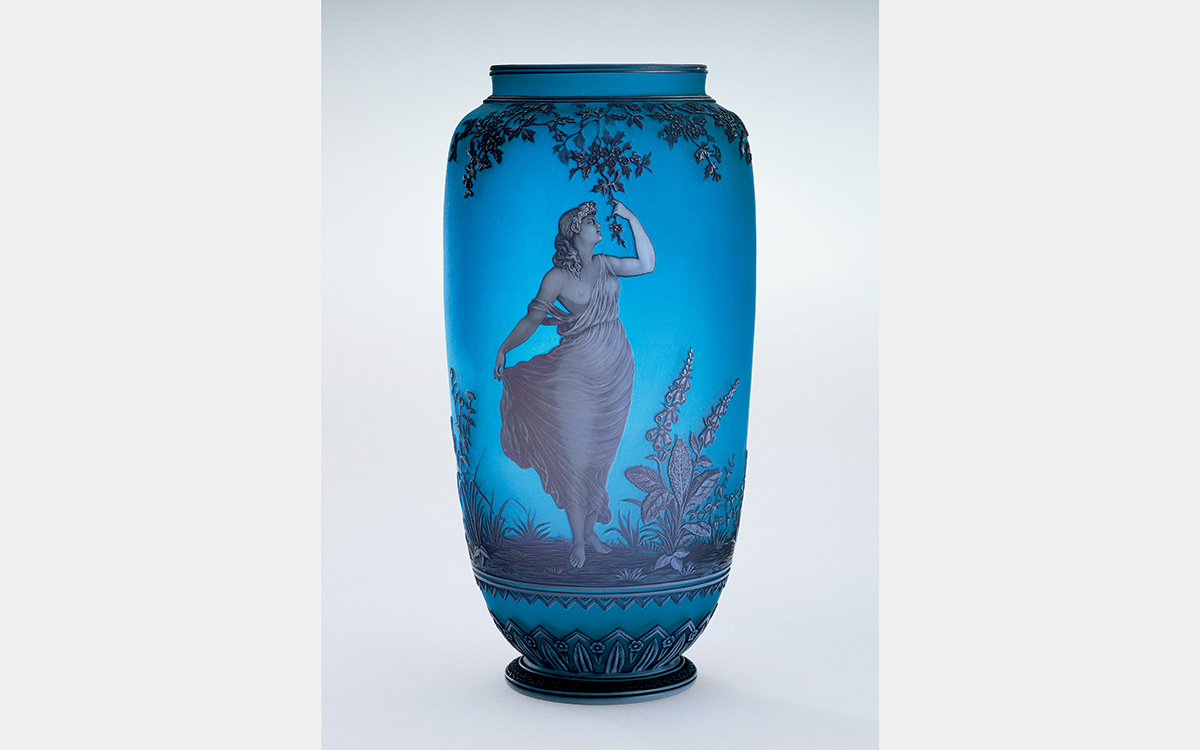
Vase, 1874–1887, Thomas Webb & Sons (British, est. 1837), manufactory, George Woodall (British, 1850–1925), designer and engraver, cameo glass, Museum Purchase, 1887.41
The cameo glass technique, which originated in classical antiquity, involves laminating two or more layers of colored glass together. The outer layer is then carved away creating a design in relief against a contrasting color of the glass layer beneath it. The process requires a great deal of skill and sharp attention to detail.
Woodall was a master of this technique and became well known for his painterly figural designs. This vibrant, blue vase, only 8 ½ inches tall, features a female figure in white with foliage above and beneath her in black, suggesting the possibility of at least three layers of glass in the piece. The level of detail engraved into the layers of this small vase is enchanting. The dimension in the branches above the figure’s head is sharp and textured where she reaches in the foreground, but soft and fading into the background. The drapery of the figure’s dress resembles layers carved into marble, with the subtle hint of blurred skin just beneath the sheer fabric. On the ground below her is an array of foliage, textured with veins and soft petals, growing from the smooth soil beneath her feet.
Next time you visit the museum, pause to notice the objects spread about the display cases. I bet you there’s a tiny object with a really big story and incredible details to discover.
Related Blog Posts

Cincinnati, OH 45202
Toll Free: 1 (877) 472-4226
Museum Hours
Museum Shop
Terrace Café
Library
Cincinnati Art Museum is supported by the tens of thousands of people who give generously to the annual ArtsWave Campaign, the region's primary source for arts funding.

Free general admission to the Cincinnati Art Museum is made possible by a gift from the Rosenthal Family Foundation. Exhibition pricing may vary. Parking at the Cincinnati Art Museum is free.
Generous support for our extended Thursday hours is provided by Art Bridges Foundation’s Access for All program.

General operating support provided by: