Through the Doors
by Bruce Petrie Jr., Board of Trustees Chair, Cincinnati Art Museum
6/29/2026
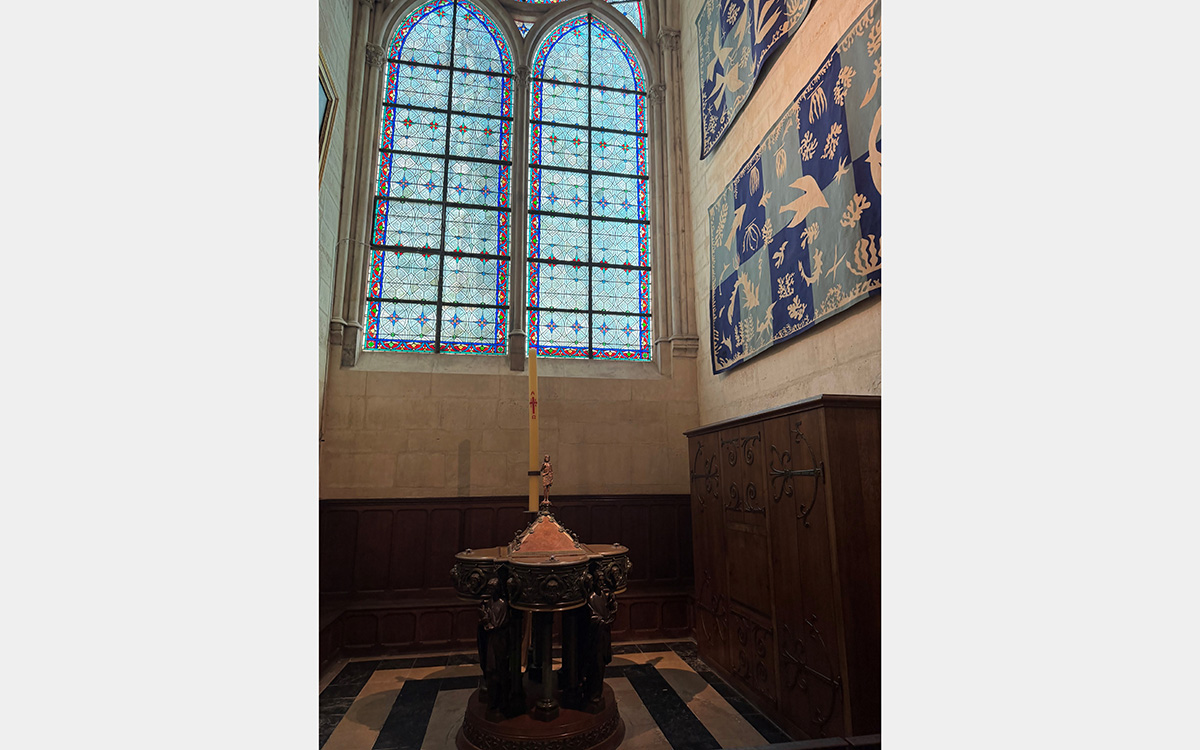
Henri Matisse (French, 1869–1954) Diptyque Polynésie, le ciel et la mer (Polynesia diptych, the Sky and the Sea), 1971, tapestries, Notre Dame de Paris
As my wife Mimi and I walk through the front entrance of Paris’s reborn, post-fire Notre Dame Cathedral, we feel the familiar connection to that other welcoming entrance: the main doors of the Cincinnati Art Museum. Both the cathedral and our museum provide global entryways to welcoming homes of sacred arts, broadly imagined and without borders. Whether the venue is Notre Dame or CAM, you can enter these spaces and experience the sacredness of art.
Art at both Notre Dame and CAM works through the careful juxtaposition of ancient and modern. When a Matisse mural is placed inside the cathedral next to medieval stained glass and artifacts, visitors see symbols that exceed and last beyond the destruction of fire and impacts of time. Similarly, CAM curators give thought and expertise to help museum goers see meaning in side-by-side comparisons of visual expression; many may experience a sacred presence, whatever various forms that may take in the religious pluralism of our times.
This is less about art history and more about the particular and universal experiences of the here and now. Visitors walk through CAM’s doors often seeking—and finding—some measure of hope in a troubled world. More than storage vaults of objects from long ago, museums are reinforcements of a hopeful present.
Related Blog Posts

Cincinnati, OH 45202
Toll Free: 1 (877) 472-4226
Museum Hours
Museum Shop
Terrace Café
Library
Cincinnati Art Museum is supported by the tens of thousands of people who give generously to the annual ArtsWave Campaign, the region's primary source for arts funding.

Free general admission to the Cincinnati Art Museum is made possible by a gift from the Rosenthal Family Foundation. Exhibition pricing may vary. Parking at the Cincinnati Art Museum is free.
Generous support for our extended Thursday hours is provided by Art Bridges Foundation’s Access for All program.

General operating support provided by: