The Renaissance of Here and Now - Part 3
by Bruce Petrie Jr., Board of Trustees Chair, Cincinnati Art Museum
7/21/2026
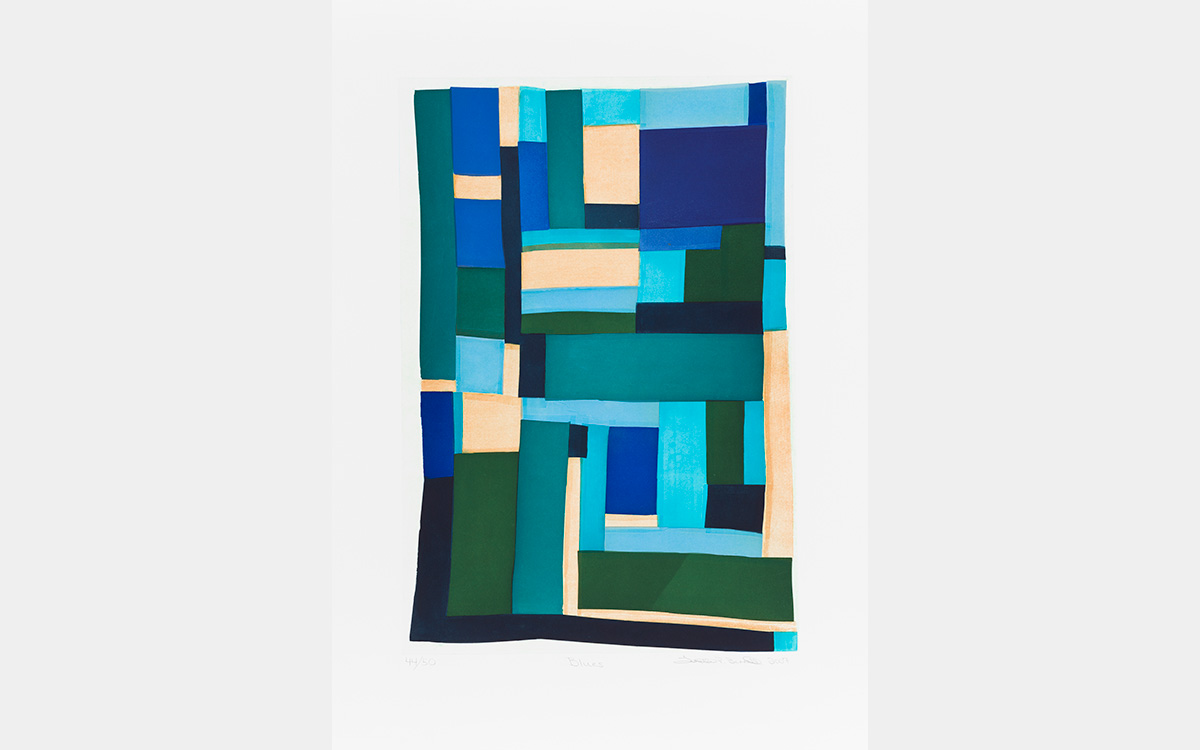
Loretta Pettway Bennett (American, born 1960), Blues, 2007, color soft ground etching with aquatint and spitbite aquatint, Museum Purchase: The David C. Herriman Trust, by exchange and Print Deaccession Funds, 2018.171
To round out the third in our trifecta on the Renaissance of the Here and Now, let’s ask: “Can AI do a Renaissance?”
Short Answer: Not really. AI can use algorithms to describe the historical Renaissance of the fifteenth century. It can simulate, create a facsimile of what others have said was going on before. But AI can’t do, can’t replicate a here-and-now Renaissance.
Why? Because the here-and-now Renaissance is what you, a biological human being, are feeling, are aware and conscious of, are subjectively experiencing right now in ways that are both unique and universal.
Sure, any phone-wielder can tap AI and ask about the color blue, and AI algorithms will synthesize information about blue. It’s a primary color; travels in light waves; scatters in atmosphere, and so on.
But we know that’s not the same as you experiencing blue, your self-awareness of blue, your consciousness of blue as you look up into a summer sky. Call it: “You On Blue.”
AI can tell you things about how Vincent van Gogh or Mark Rothko felt about the color blue. AI may also mimic what its algorithms have said “blue” feels like, that is, happy, sad. etc.
But You On Blue is what you feel.
While AI’s algorithms collect lots of words, these aren’t the equivalency of colors, any more than musical notes are.
Try as we might, we can’t really describe a color; or a form or shape; or a composition. We put the phone down, step outside, look up and try to verbally capture the sky, the colors, shapes of clouds, what goes where within the frame of our looking. No matter how lyrical or scientific our descriptions of “sky” might be, we’re left with a gap between our felt experience and our expressions.
So, while AI is a tool, and maybe a useful one to describe historically what a renaissance is about, the tool isn’t the equivalent of you, your human experience, your feelings and meanings.
That part—the being part of human being—is where the Renaissance action is.
Related Blog Posts

Cincinnati, OH 45202
Toll Free: 1 (877) 472-4226
Museum Hours
Museum Shop
Terrace Café
Library
Cincinnati Art Museum is supported by the tens of thousands of people who give generously to the annual ArtsWave Campaign, the region's primary source for arts funding.

Free general admission to the Cincinnati Art Museum is made possible by a gift from the Rosenthal Family Foundation. Exhibition pricing may vary. Parking at the Cincinnati Art Museum is free.
Generous support for our extended Thursday hours is provided by Art Bridges Foundation’s Access for All program.

General operating support provided by: