Drawing from Eve
by by Bruce Petrie Jr., Board of Trustees Chair, Cincinnati Art Museum
10/9/2026
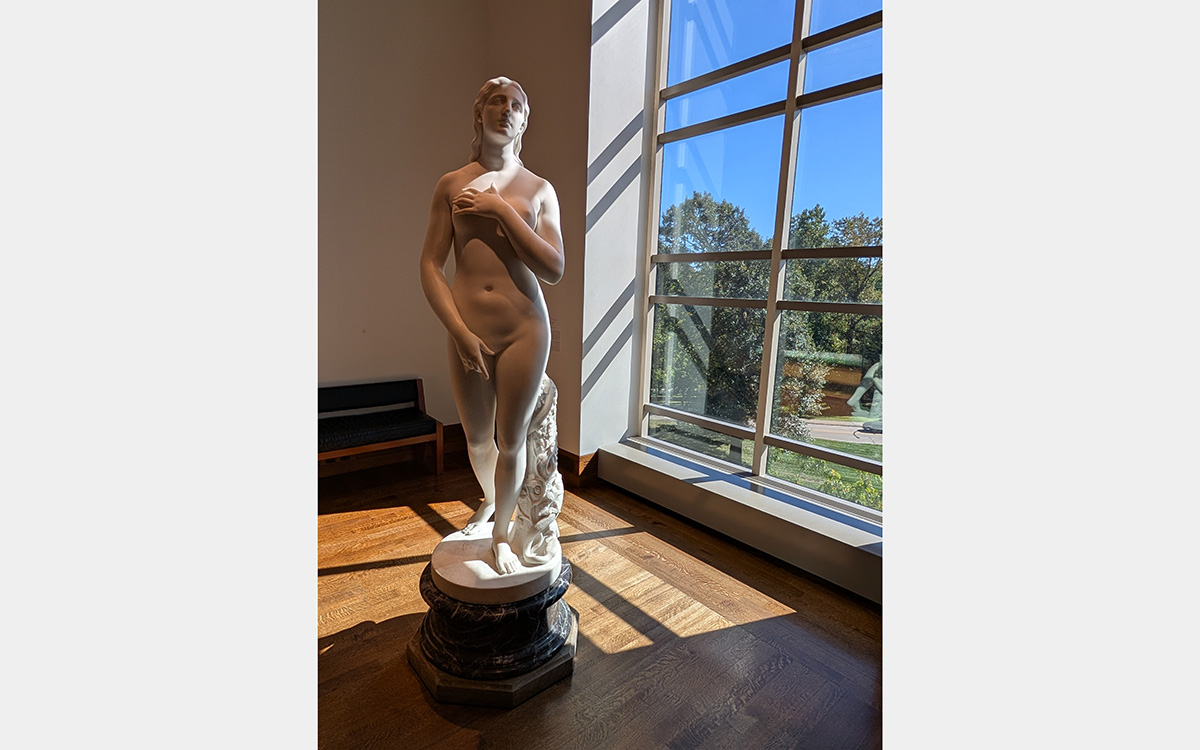
Hiram Powers (American, 1805–1873), Eve Disconsolate, 1858-1860, marble, Gift of Nicholas Longworth, 1888.86
Figurative drawing and sculpting are of people, by people, and for people. AI images don’t meet this human, people-based definition.
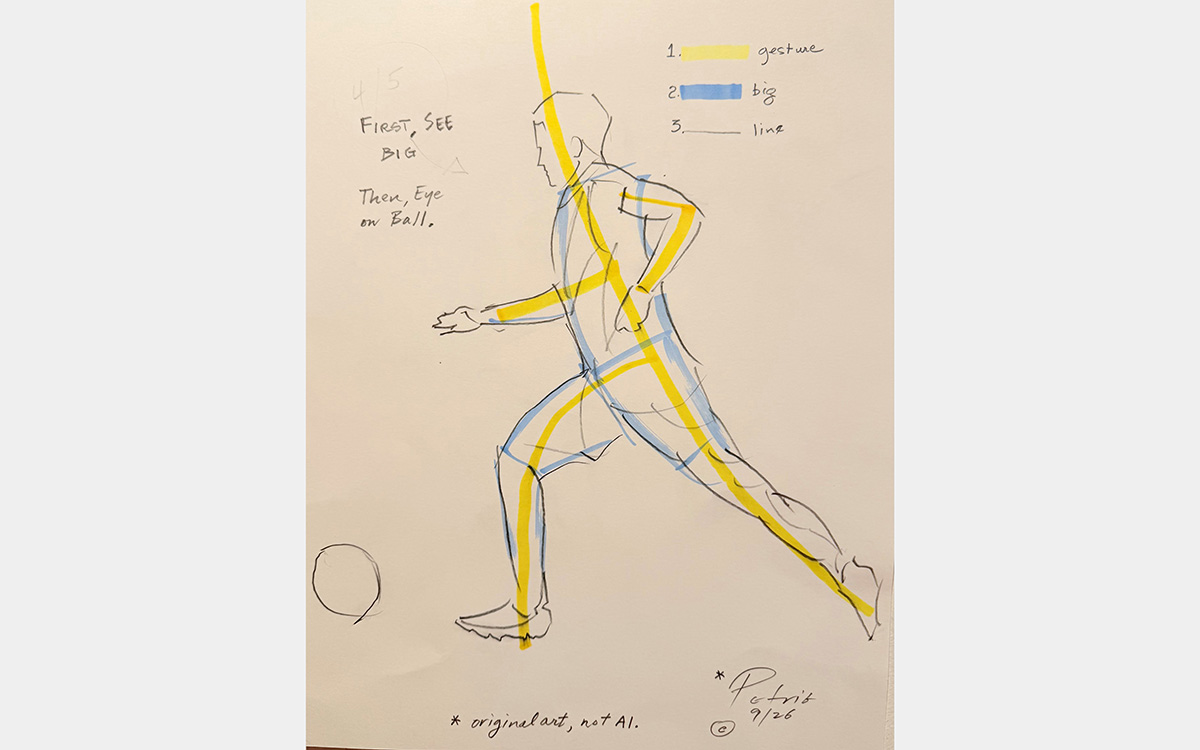
In SketchCAM’s prior blog post, we showed how to sketch a figure of a moving soccer player in three steps: gesture, form, line. The goal is to simplify drawing by looking at the big picture.
When visiting the museum, you will see figurative work everywhere. We can use pencil and sketchpad and the simple three-step process to draw figurative artwork. (We don’t dwell on trying for copy-like realism in a quick sketch.)
CAM’s collection includes a well-known marble sculpture, Eve Disconsolate (1858–60), that we can view to learn figurative drawing (one of the best ways in the world to do so!). Yes, the world. The sculpture’s marble is from Florence, Italy. The masterpiece was carved by Cincinnatian Hiram Powers (1805–1873) whose family moved to the Ohio frontier when he was 14 in the pre-Civil War era. Powers ventured as an adult to Florence to have access to marble and learn figurative drawing and sculpture. Americans during the Civil War Era flocked to see his genius-level masterpieces, some of which spoke to abolishing slavery.
You can sketch his sculpture today at our museum. Eve Disconsolate stands life size. It doesn’t move, which helps in drawing, right? You will see its gesture, form, and lines.
As you observe the sculpture you will see gestures of emotion: especially its “disconsolate” name, its allegorical meaning both individual and on behalf of a disconsolate homeland in civil war with itself.
Sketching silently for less than a half hour may bring these things out in us, in our own human ways, inviting you into a visual experience, a connection with others. These 300 plus million brains, bodies, and spirits are we the people—not we the algorithms.
Should we be afraid that non-human AI will take over? No. No fear. As long as we see, make, and nurture the humanity in our midst every day. That’s what CAM does.
Look forward to seeing you, sketchbook in hand, at our (thoroughly human) museum!
Related Blog Posts

Cincinnati, OH 45202
Toll Free: 1 (877) 472-4226
Museum Hours
Museum Shop
Terrace Café
Library
Cincinnati Art Museum is supported by the tens of thousands of people who give generously to the annual ArtsWave Campaign, the region's primary source for arts funding.

Free general admission to the Cincinnati Art Museum is made possible by a gift from the Rosenthal Family Foundation. Exhibition pricing may vary. Parking at the Cincinnati Art Museum is free.
Generous support for our extended Thursday hours is provided by Art Bridges Foundation’s Access for All program.

General operating support provided by: