Disclosing AI, Protecting Artists
by Bruce Petrie Jr., Board of Trustees Chair, Cincinnati Art Museum
9/23/2026
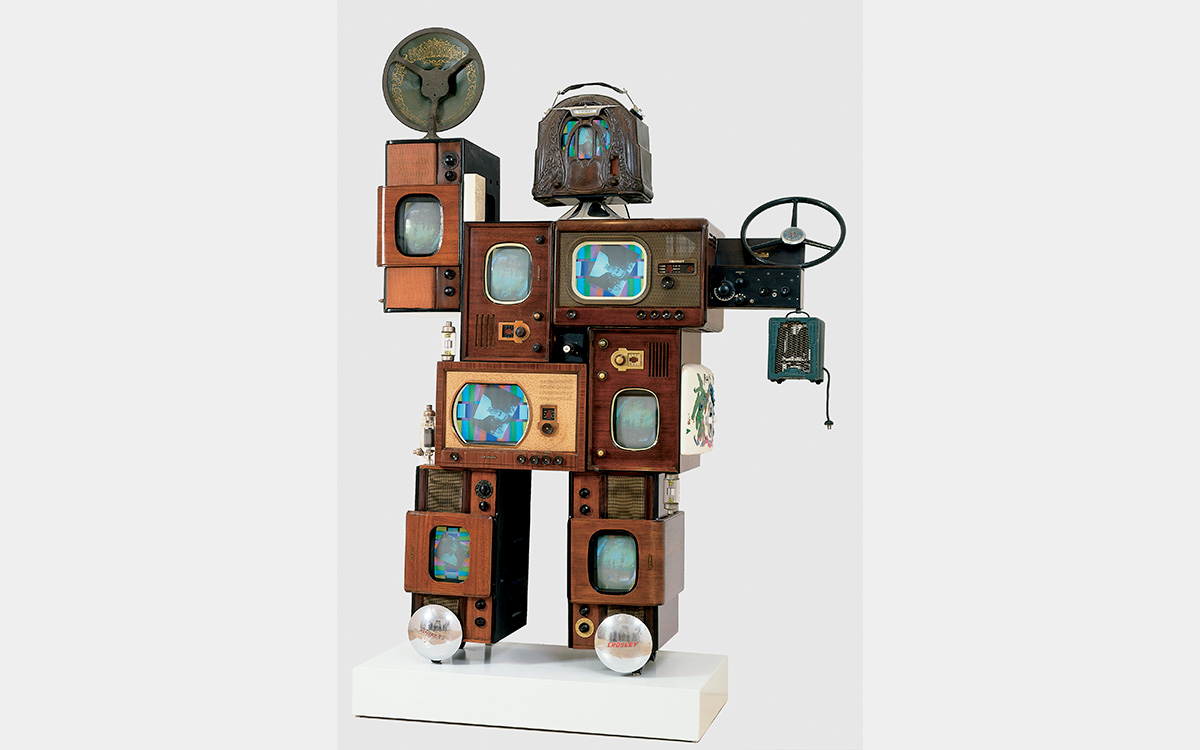
NOT AI GENERATED 😉 Currently on view in Gallery 104.*
Nam June Paik (American, 1932–2006), Powel Crosley, Jr., 1992, wood, plastic, paint, glass, custom electronics, parts from a variety of Crosley products that date from the 1920s through the early 1950s, eight CRT televisions, two DVD players, video, John J. Emery Endowment and The Edwin and Virginia Irwin Memorial, 1992.140
In the twenty-first century’s Visual Age, generations are consuming hour after hour of screen imagery made by non-humans. Despite warnings from science, the Wild West of AI charges ahead, generating “artworks” from algorithms in contrast to those created by human inspiration.
It is time to lean forward with educational leadership from a broad-based visual arts community of makers, consumers, museums, cultural organizations, historians, buyers and sellers, and the public-at-large. The community should lead by promoting certain first principles. Here’s one example:
“Disclosure of true and accurate facts about a work of art, including who created it and whether the creator was non-human/artificial intelligence, promotes the integrity of the visual arts.”
Professional arts managers, including museum conservators and curators, follow best standard practices in labeling artwork. Beginning with the all-important collection accession number on the art, skilled labeling also includes data such as artist name, artwork title, date created, materials and methods, provenance, and so on.
An art maker may well wish to accurately state the medium (for example, oil on canvas) while also stating: “original creation by (name), not using AI.” This reinforces the value of art by identifying its human maker, while robot art made entirely by AI is not protectable by copyright.
In our consumer culture we are surrounded by representations, promises, guarantees, warranties, expectations, and assumptions about products, from your toothpaste to your car to your TV and phone. “Who made this?” is a part of a trust equation that goes into the purchasing decision. The trustworthiness of the brand, like P&G, is the polish for fungible consumer products.
But original artwork isn’t fungible.
It’s up to a person’s preferences and judgment about whether to consider AI-generated “art” to be art or not. But as AI floods the Internet with robotic imagery, using algorithms to rake in artwork made by others—and ignores copyright—the visual arts community should call for fair and accurate disclosure of who made it.
*Note on Nam June Paik’s Powell Crosley, Jr. (1992)
Renowned artist Nam June Paik (1932–2006) created this "robot" in Cincinnati during a time when the Paik Factory pumped out more that 400 artworks in studio spaces in Over-the-Rhine and the West End. Often credited as "the father of video art," Paik composed Powell Crosley, Jr. using vintage televisions and radio sets manufactured in Cincinnati by the Crosley Corporation. To learn more about the sculpture, visit CAM’s Instagram feed.
Related Blog Posts

Cincinnati, OH 45202
Toll Free: 1 (877) 472-4226
Museum Hours
Museum Shop
Terrace Café
Library
Cincinnati Art Museum is supported by the tens of thousands of people who give generously to the annual ArtsWave Campaign, the region's primary source for arts funding.

Free general admission to the Cincinnati Art Museum is made possible by a gift from the Rosenthal Family Foundation. Exhibition pricing may vary. Parking at the Cincinnati Art Museum is free.
Generous support for our extended Thursday hours is provided by Art Bridges Foundation’s Access for All program.

General operating support provided by: